




Process
How to Write a Brief for a Dev Agency
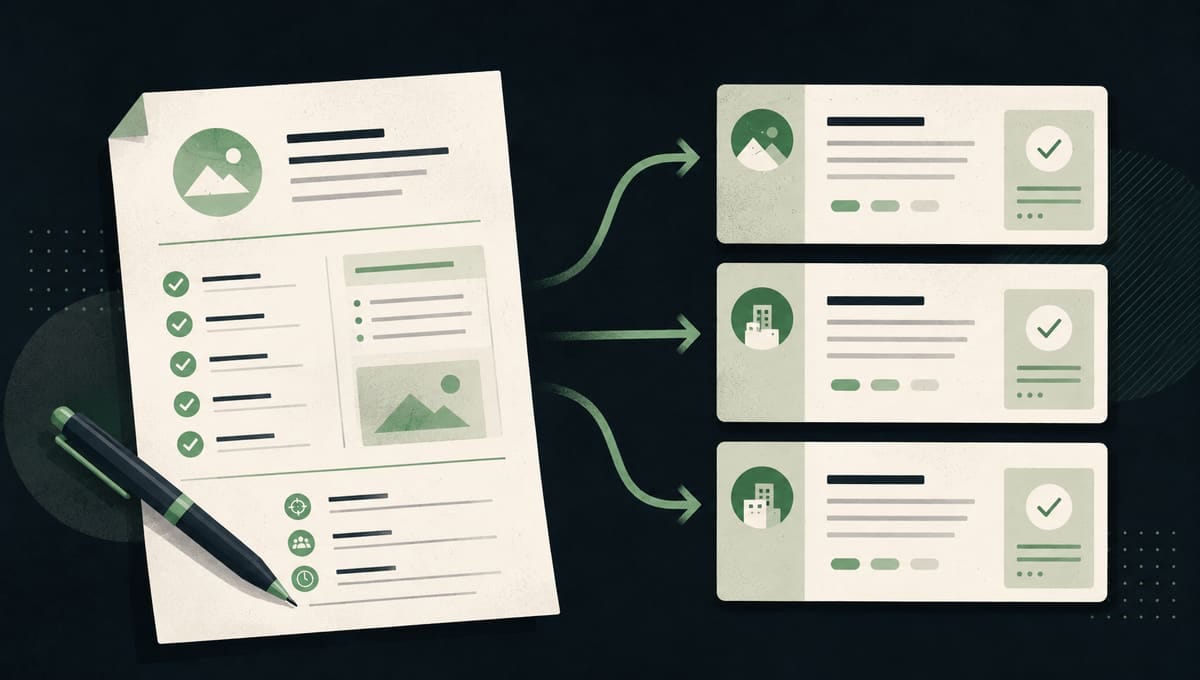
The brief you hand an agency is the single biggest lever you control over the quote you get back. A vague brief gets you vague, padded, un-comparable numbers — every agency guesses at a different scope, so you end up comparing apples to submarines. A sharp brief gets you accurate quotes, proposals you can line up side by side, and a build that matches what you actually had in your head. Here is exactly what a good brief contains, and how to write one.
What should a software development brief include?
A good software development brief should include the problem you are solving, who it is for, the core features that are in scope, an explicit out-of-scope list, your budget range, your target timeline, and how you will measure success — plus any technical constraints and existing assets. That is enough for an agency to quote accurately without a dozen clarifying calls, and enough for you to compare proposals fairly.
The brief is not a spec. You are not writing acceptance criteria or wireframing every screen — that is the agency's job during discovery. You are giving them the shape of the problem and the boundaries of the work, clearly enough that two different teams would quote roughly the same thing.
The nine things a good brief contains
| Section | What to write | Why it matters |
|---|---|---|
| Problem & goal | The problem you are solving and the outcome you want, in plain English | Anchors every scoping decision to intent, not features |
| Users | Who uses this, and the one job they hire it to do | Stops the team building for the wrong person |
| Core features (in scope) | The handful of things the product must do to be useful | Defines what you are actually paying to build |
| Out of scope | What you are explicitly not building in this phase | Prevents padded quotes and scope-creep arguments later |
| Budget range | A real range, even a wide one | Lets the agency shape scope to your money, not guess |
| Timeline | Target launch and any hard deadlines (fundraise, event) | Surfaces feasibility before you sign, not in week six |
| Success metrics | How you will know it worked | Separates must-haves from nice-to-haves |
| Tech & constraints | Existing stack, integrations, compliance (GDPR, payments) | Avoids quotes built on wrong assumptions |
| Existing assets | Designs, brand, code, accounts you already have | Changes the price — reuse is cheaper than rebuild |
Notice the two sections founders most often skip: out of scope and budget range. Those two do more to produce an accurate, comparable quote than any amount of feature detail. An agency that knows your ceiling and your boundaries can design a build that fits both. One left guessing will either pad for safety or lowball to win, and neither serves you.
Why does a good brief get you a better quote?
Because a quote is a bet on scope, and a clear brief removes the risk premium. When an agency cannot tell exactly what you want, they price for the worst case — every ambiguity becomes contingency they bake into the number. Vague briefs produce inflated quotes, or worse, low quotes that balloon through change requests once the real scope surfaces.
A tight brief also makes proposals comparable. If three agencies quote against the same explicit scope, differences in price and timeline mean something — you are comparing how they work, not what they guessed you meant. Against a fuzzy brief, one team quotes an MVP, another quotes a platform, and the numbers tell you nothing.
There is a relationship signal here too. The clarity of your brief tells the agency how you will be to work with. A founder who can articulate the problem, the boundaries, and the metric is a founder who will make decisions during the build instead of stalling it. Good agencies quote those founders more keenly because the project is lower-risk to deliver. Getting the brief right is the first move in the same judgement covered in how to choose a software development agency — it works in both directions.
What do you leave OUT of a brief?
Just as important as what goes in. Leave out:
- Solutions and implementation detail. Describe the problem, not the database schema. "Users need to see their spending by category" — not "build a Postgres table with a categories foreign key." Prescribing the how removes the expertise you are paying for, and locks you into your own guess.
- Every edge case. You do not need to specify what happens when a user enters emoji into a price field. Cover the main flow; discovery handles the corners. Over-specifying edges signals you have confused a brief with a spec.
- Rigid screen-by-screen wireframes (unless you genuinely have them). Rough sketches help; pixel-perfect mockups you are wedded to often hurt, because they smuggle in assumptions the team would improve on.
- Internal politics and backstory. The agency does not need the history of why the last build failed or which co-founder wants which feature. Give them the decision, not the debate.
- Padding features "to see what they cost." Every speculative feature you list gets priced. If you are not sure it belongs, put it on a clearly-labelled "later / phase two" list so it does not inflate the core quote.
The discipline of cutting is the same discipline that makes a project shippable — it is the heart of how to scope a SaaS MVP in 8 weeks, and the brief is where it starts. If you cannot decide what is out of scope, you are not ready to brief yet.
How much detail is too much?
The right length for a brief is one to three pages. If it is shorter than a page, you have not given enough for an accurate quote. If it runs past three or four, you have almost certainly crossed from briefing into specifying — and a long brief is not a sign of clarity, it is usually a sign you are trying to control decisions that belong in discovery.
A useful test: could two different agencies read your brief and quote roughly the same scope? If yes, it is detailed enough. Could they build the whole thing without ever talking to you? Then it is too detailed — you have written a spec, and you have removed the collaborative scoping that produces a better product than your first idea.
Aim for the middle. Enough that the shape is unambiguous; loose enough that the people you are hiring for their judgement can still apply it.
A copyable brief template
Fill this in and you have a brief that gets accurate, comparable quotes:
PROJECT BRIEF — [Product name]

1. PROBLEM & GOAL
   The problem: [one or two sentences]
   The outcome we want: [what success looks like for the business]

2. USERS
   Primary user: [who they are]
   The job they hire this to do: [one sentence]

3. CORE FEATURES (IN SCOPE)
   - [must-have 1]
   - [must-have 2]
   - [must-have 3]
   (Keep this to the handful that make the product useful.)

4. OUT OF SCOPE (this phase)
   - [not building yet]
   - [not building yet]

5. BUDGET RANGE
   [e.g. £15k–£25k] — a real range, even if wide.

6. TIMELINE
   Target launch: [date]
   Hard deadlines: [fundraise / event / none]

7. SUCCESS METRICS
   We will know this worked if: [the one number or behaviour]

8. TECH & CONSTRAINTS
   Must integrate with: [Stripe, existing API, etc.]
   Compliance: [GDPR, payment data, none]
   Stack preferences: [only if you genuinely have them]

9. EXISTING ASSETS
   We already have: [designs / brand / code / accounts]

10. DECISION PROCESS
   Who signs off: [name/role]
   Deciding by: [date]
That last section — decision process — is the one experienced founders add and first-timers forget. Telling an agency who decides and by when says you are serious, and it is often the difference between a proposal that gets prioritised and one that sits in a queue.
Frequently asked questions
Do I need to specify the tech stack?
No — describe your constraints (existing systems, integrations, compliance) and let the agency recommend the stack unless you have a hard, informed reason to mandate one. Prescribing a stack you are not expert in removes the judgement you are paying for.
Should I include my budget?
Yes — always give a real range, even a wide one. Withholding budget does not get you a cheaper quote; it gets you a padded or mismatched one, because the agency cannot shape scope to money it cannot see. See how much an MVP costs in the UK if you need a realistic range to anchor on.
What if I don't know the exact features yet?
Then brief the problem, the user, and the outcome, and say explicitly that scoping the features is part of the engagement. A good agency will quote a discovery phase to define scope with you — that is normal and healthy, not a gap in your brief.
Is a brief the same as a spec or a prototype?
No — a brief describes the problem and boundaries; a spec details the build; a prototype tests an idea. If you are unsure which you actually need first, MVP vs prototype vs POC breaks down the difference.
The bottom line
A good brief includes the problem, the users, the in-scope features, an explicit out-of-scope list, a real budget range, a timeline, success metrics, technical constraints, and existing assets — in one to three pages. It describes the problem and the boundaries, not the implementation. Get those right and you will get accurate quotes, proposals you can actually compare, and a build that matches what you meant.
If you want a partner who will pressure-test your brief before quoting — tell you what to cut, flag what is missing, and quote honestly against real scope — that is where our product strategy work starts. See pricing for what builds cost, or book a free scoping call and we will turn your brief into a plan together.
Keep reading



Leave a comment