


Pricing
How Much Does It Cost to Maintain a SaaS?
Founders budget hard for the build and forget the bill that arrives every month after it. A SaaS isn't a thing you buy once — it's a thing you keep running. Servers cost money while you sleep, third-party services meter every user, and someone has to patch the security hole that appears three weeks after launch. The good news: for an early-stage product, ongoing cost is far smaller than the build. Here's the honest breakdown of what it takes to keep a SaaS alive in the UK in 2026.
How much does it cost to maintain a SaaS?
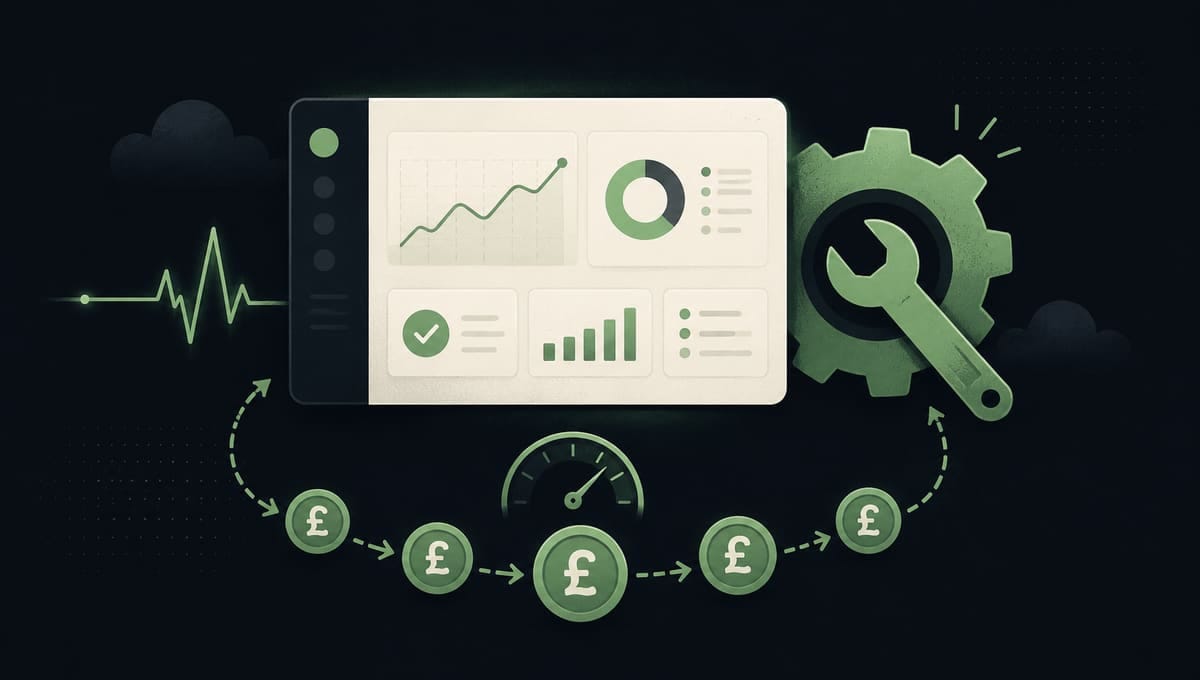
For an early-stage UK SaaS, maintenance typically runs £50–£500 per month — roughly £600–£6,000 a year — covering hosting, third-party services, monitoring, security updates, and bug fixes, before you add new features. The number is driven mostly by user volume and how many paid services your product leans on, not by how big the codebase is.
That range is wide for the same reason MVP build cost is wide: "maintenance" means different things. A pre-revenue product with ten users and generous free tiers can genuinely run for under £100/month. A product with a thousand active users, transactional email, error monitoring, and a support inbox sits at the top of the range — and that's before a single new feature. Maintenance is a floor, not a fixed number.
The ongoing cost breakdown
Here's where the money actually goes for a live, early-stage SaaS. These are realistic UK figures for a product that has launched but isn't yet at scale.
| Category | What it covers | Typical monthly cost |
|---|---|---|
| Hosting / infrastructure | App hosting, database, storage, bandwidth, CDN | £10–£150 |
| Third-party services | Stripe fees, transactional email, auth, analytics | £20–£200+ |
| Monitoring / security | Error tracking, uptime alerts, backups, dependency patches | £10–£80 |
| Ongoing dev / bug fixes | Fixes, dependency upgrades, small tweaks | £0–£300 |
| Support / small features | Answering users, minor UX changes, tiny features | £0–£250 |
A few notes on the lines that surprise people. Stripe fees aren't a flat cost — they're roughly 1.5%–2.9% + 20p per transaction, so they scale with revenue rather than sitting in a plan. Transactional email (password resets, receipts, notifications) looks free until you cross a provider's free tier, then becomes a real line. And the dev line is the one founders zero out and shouldn't — every dependency you ship on releases security patches, and ignoring them is how a small product becomes an unmaintainable one.
What are the hidden ongoing costs?
The infrastructure bill is the obvious cost. The hidden ones are what catch founders out in the first year.
- Security and dependency updates. Your app sits on dozens of open-source packages, and they publish patches — some of them urgent. Staying current is unglamorous, non-optional, and takes real time each month.
- Backups and recovery. Cheap to run, catastrophic to skip. You don't feel this cost until the day you need it, and then it's the only cost that matters.
- Certificate and domain renewals. Small, annual, and exactly the kind of thing that expires quietly and takes your product offline for a morning.
- The "one small thing" tax. A copy change here, a broken layout on a new phone there. Individually tiny; collectively a steady monthly demand on someone's time.
None of these are large on their own. Together they're the reason a "finished" product still needs an owner. If you've just launched, our guide to the first 90 days after MVP launch covers how to triage these without drowning.
Do you need a maintenance contract?
If nobody on your team can confidently deploy a fix and patch a dependency, yes — otherwise a small retainer buys you the peace of mind of a known number.
The honest answer depends on your team. If you have a technical co-founder who built the thing, day-to-day maintenance might just be part of their week. But most founders who commission a build don't have that person — and a live product with paying users can't wait a fortnight for a critical fix while you find a freelancer.
A maintenance contract solves three problems at once: someone is accountable for keeping the product up, security patches actually get applied, and bugs get fixed by people who already know the codebase rather than someone reverse- engineering it at emergency rates. The alternative — calling around for help the day something breaks — is slower and usually more expensive per hour.
This is why we offer fixed-price maintenance from around £290/year for smaller products, scaling with the surface area of what needs looking after. It keeps the product patched, monitored, and backed up, with a known route for bug fixes — so the running cost is a line you can plan for, not a surprise. You can see the maintenance plans on our pricing page, and the underlying hosting and reliability work sits in our DevOps and cloud infrastructure service.
How does running cost scale with users?
Here's the part that decides whether your unit economics work: maintenance cost isn't flat — most of it scales with how many users you have and what they do. Understanding that curve early is what separates a healthy SaaS from one that gets more expensive to run than it earns.
Two forces drive the scaling:
- Per-user infrastructure cost. More users mean more database rows, more storage, more bandwidth, and eventually a bigger server. For most SaaS this grows gently — modern hosting handles your first few thousand users cheaply — but it's real, and it steps up as you cross tiers.
- Per-user service cost. This is the sharper one. Every user might trigger emails, file storage, or API calls to paid services. If your product uses AI, this is dramatic: each action is a metered model call, which is exactly the dynamic we break down in how much it costs to build (and run) an AI app.
The discipline that matters is the same one we push for AI products: model your cost per active user, then make sure your price sits comfortably above it. If an average user costs you 40p/month to serve and a power user costs £4, your pricing tiers have to reflect that. Choosing an efficient stack up front helps too — the SaaS MVP tech stack for 2026 we recommend is picked partly because it keeps running costs low as you grow.
The reassuring news: for the first year of most products, per-user cost is measured in pennies, and only becomes a headline number once you have the traction that also brings revenue to cover it. Build cost is a one-time question you answer before you start; running cost is a curve you manage as you grow.
Frequently asked questions
Can you maintain a SaaS for under £100/month?
Yes — a small, early-stage SaaS with modest usage can genuinely run for under £100/month in hosting and services, plus a light maintenance retainer on top. Generous free tiers on hosting, email, and monitoring mean a pre-revenue or early product often costs very little to keep alive. The cost climbs as you add users and lean on more paid services, but "under £100/month to run" is realistic for a lean product — the variable you can't safely zero out is someone being responsible for security patches.
What does a maintenance retainer include?
Typically hosting oversight, security and dependency updates, monitoring and backups, and a known route for bug fixes — with small tweaks often bundled in. Our fixed-price maintenance keeps the product patched, watched, and recoverable, so you're not paying emergency rates the day something breaks. Larger new features usually sit outside a maintenance plan and get scoped separately — a retainer keeps the lights on; it isn't an open-ended dev budget.
Who fixes bugs after launch?
Whoever holds your maintenance — ideally the team that built it, because they already know the codebase and can fix fast. Without a plan in place, you're finding and briefing someone new mid-emergency, which is slower and pricier per hour. This is the single strongest argument for a maintenance retainer: bugs get fixed by people who don't need to learn your product first.
Is maintenance included in the build price?
No — the build is a one-time cost, and maintenance is the ongoing cost that starts once you're live. We quote them separately so both are transparent: a fixed price for the MVP build, and a separate fixed-price maintenance plan from around £290/year to keep it running afterwards.
The bottom line
Maintaining a SaaS isn't the scary number founders fear it might be. For an early-stage UK product, expect £50–£500 per month to keep it hosted, patched, monitored, and bug-free — a floor set by your infrastructure and services, plus a curve that scales gently with users. The mistake isn't overspending on maintenance; it's forgetting to budget for it at all, then discovering that "finished" software still needs an owner.
Build cost is a one-time question. Running cost is forever — so plan for it before you launch, not after the first bill lands.
Want a clear number for keeping your product running? Book a free scoping call — we'll model your per-user running cost and quote a fixed-price maintenance plan, so the ongoing number is as predictable as the build.
Keep reading



Leave a comment