




Pricing
How Much Does an AI App Cost to Build? (UK 2026)
"AI app" makes founders assume a huge budget — visions of training models and GPU bills. For founders in the UK in 2026, the opposite is usually true: an AI-powered MVP often costs about the same to build as a normal SaaS MVP, because you're calling a model API, not building one. The cost that catches people out isn't the build — it's the running cost per user once you launch. Here's the honest breakdown.
How much does it cost to build an AI app?
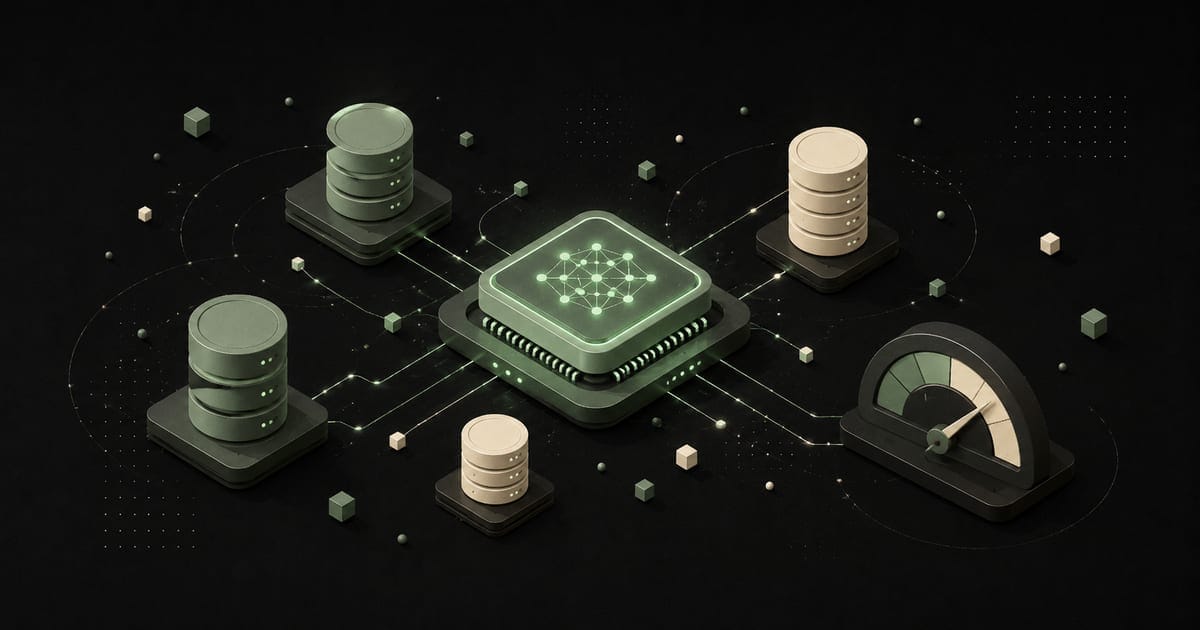
In the UK in 2026, most AI apps cost the same to build as a comparable SaaS MVP — typically £15K–£40K for a production build — because the "AI" is an API call to OpenAI, Anthropic, or an open model, not a custom-trained model. The differentiator is running cost: every AI feature has a per-use API bill, so your unit economics — cost per user per month — matter as much as the build price.
The mental shift: for an AI MVP, you're not buying a bigger build. You're buying a normal build plus a variable cost line that scales with usage. Budget for both.
Build cost vs running cost
This is the distinction that changes the whole conversation.
| Build cost (one-time) | Running cost (ongoing) | |
|---|---|---|
| What it is | Designing + engineering the app | Per-request API/model calls |
| Rough size | £15K–£40K for a production MVP | Pennies to £ per user action |
| Scales with | Scope + complexity | Usage / number of users |
| Who worries about it | Everyone, up front | Almost nobody, until the bill lands |
Because model APIs do the heavy lifting, the build looks a lot like any other custom software development project — the same phases and price bands we lay out in the UK MVP cost breakdown. The AI part is often a smaller slice of the build than founders expect.
What drives the build cost
| Factor | Cheaper | Pricier |
|---|---|---|
| AI approach | Call a model API (prompting) | Fine-tuning, RAG pipelines, agents |
| Data | Off-the-shelf model knowledge | Your own data ingested + indexed |
| Feature depth | One AI feature done well | AI woven through the whole product |
| Guardrails | Basic | Heavy safety, eval, and moderation needs |
| Integrations | Standalone | Deep hooks into existing systems |
Most MVPs sit on the cheaper side: one well-chosen AI feature, prompting a hosted model, wrapped in a normal app. That's deliberately how we'd scope it — add AI only where it solves a real problem, not as a headline.
What does each type of AI app cost?
Within the £15K–£40K band, the type of AI app you're building is the biggest predictor of where you land — a chatbot on your own content sits at the bottom of the range, while a multi-step agentic workflow sits at (or above) the top. Here's how the common builds break down in the UK in 2026:
| AI app type | Typical UK build cost | What you're paying for |
|---|---|---|
| AI feature added to an existing SaaS | £8K–£18K | One scoped feature (summaries, drafting, search) wired into your current product |
| Chatbot / assistant on your content | £15K–£25K | Prompt design, conversation UI, guardrails, basic retrieval over your docs |
| RAG document tool | £20K–£35K | Ingestion pipeline, chunking + embeddings, retrieval quality, evals |
| Agentic workflow | £30K–£40K+ | Multi-step tool use, error recovery, human-in-the-loop review, heavy testing |
Two patterns worth noticing. First, adding AI to a product that already exists is cheaper than building a new app around AI — the app is the expensive part, not the model call. Second, cost tracks how much the AI has to be right: a chatbot that occasionally hedges is fine; an agent that books things, moves money, or emails your customers needs guardrails and testing that legitimately cost money.
The running cost nobody budgets for
Here's where AI apps differ from ordinary SaaS. Every AI action — a summary, a chat reply, a generated draft — is a paid API call. Get this wrong and a popular feature becomes a loss-maker.
Three things that control your running cost:
- Which model you use. Frontier models cost more per token than smaller or open ones. Matching model to task — cheap model for easy jobs — is the single biggest lever. We compare the options in choosing an LLM for your SaaS.
- How much you call it. Caching, batching, and not re-running the model on every render keep costs sane.
- Your pricing. If a power user triggers £8 of API calls a month, your plan has to cover it. This is why AI products lean toward usage-based or higher-tier pricing — a point we make in how to price your SaaS.
The fix is simple but easy to skip: model your cost-per-active-user before you launch, and make sure your price is comfortably above it.
A realistic example
A typical AI SaaS MVP — say a tool that ingests documents and answers questions about them — looks roughly like:
Build:        £15K–£30K (normal SaaS MVP + one AI feature + light RAG)
Model:        Hosted API (OpenAI / Anthropic / open model)
Running cost: ~£0.05–£0.50 per document processed, depending on model + size
Pricing:      Usage-tiered so heavy users cover their own API cost
Timeline:     8–12 weeks (same as a comparable non-AI MVP)
Nothing exotic. A normal build, a model API, and disciplined unit economics.
Frequently asked questions
Can you build an AI app for under £10K?
Yes — as a validation prototype or a single AI feature bolted onto an existing product, but not as a full production app. For under £10K we'd build a working front end with one real AI flow behind it — enough to demo to users and investors and prove the AI actually solves the problem. What you can't get for £10K is production infrastructure, accounts, billing, and the guardrails a live AI product needs. Validate cheap first; spend the £15K–£40K once you know people want it.
How much does it cost to run an AI app per user?
For a typical AI SaaS in 2026, budget roughly £0.50–£5 per active user per month in model API costs — heavy users on frontier models can cost far more. The spread depends on which model you call, how long your prompts and outputs are, and how often users trigger AI actions. The discipline that matters: measure cost per active user in your first month live, then price your plans comfortably above it.
Does fine-tuning a model cost more?
Yes — fine-tuning typically adds £5K–£15K of data preparation, training, and evaluation work, and most products don't need it. In 2026, prompting a well-chosen hosted model with your data retrieved into context (RAG) gets you 90% of the quality for a fraction of the cost. We'd only recommend fine-tuning once you have real usage data showing where prompting falls short — and the right base model matters more, as we cover in choosing between OpenAI and Anthropic for your SaaS.
How long does an AI app take to build?
A production AI MVP takes 8–12 weeks — the same as a comparable non-AI build. The model API is the quick part; the weeks go on the normal product work (design, backend, accounts, deployment) plus prompt iteration and testing the AI on real inputs. Agentic products run longer because the testing surface is bigger.
The bottom line
Building an AI app in 2026 usually costs about the same as a normal SaaS MVP — £15K–£40K — because you're calling a model, not training one. The number that actually decides whether your AI product works is the running cost per user: pick the right model for each task, control how often you call it, and price above your API bill. Get the unit economics right and AI is affordable; ignore them and a hit feature can lose you money.
Build cost is a one-time question. Running cost is forever — so design for it from day one.
Thinking about an AI-powered product? Book a free scoping call — we'll scope the build and model your per-user running cost, then quote it fixed-price.
Keep reading

Leave a comment