


Engineering
OpenAI vs Anthropic: Which LLM for SaaS? (2026)
Once you've decided your SaaS needs an AI feature, the next question is which model to build on — and the debate usually collapses into brand loyalty. That's the wrong frame. The model is an implementation detail you should be able to swap, and the right choice depends on the task, your cost target, and your privacy needs. Here's how we'd choose an LLM in 2026 without marrying a vendor.
Which LLM should you use for your SaaS?
For most SaaS MVPs in 2026, start with a hosted API — OpenAI or Anthropic — and pick per task, not per brand. Use a frontier model (either provider) for hard reasoning and quality-critical features, a smaller/cheaper model for high-volume simple tasks, and reach for an open-source model (Llama, Mistral, and similar) only when data privacy, cost at scale, or on-prem requirements justify the extra operational work. Build behind an abstraction so you can switch.
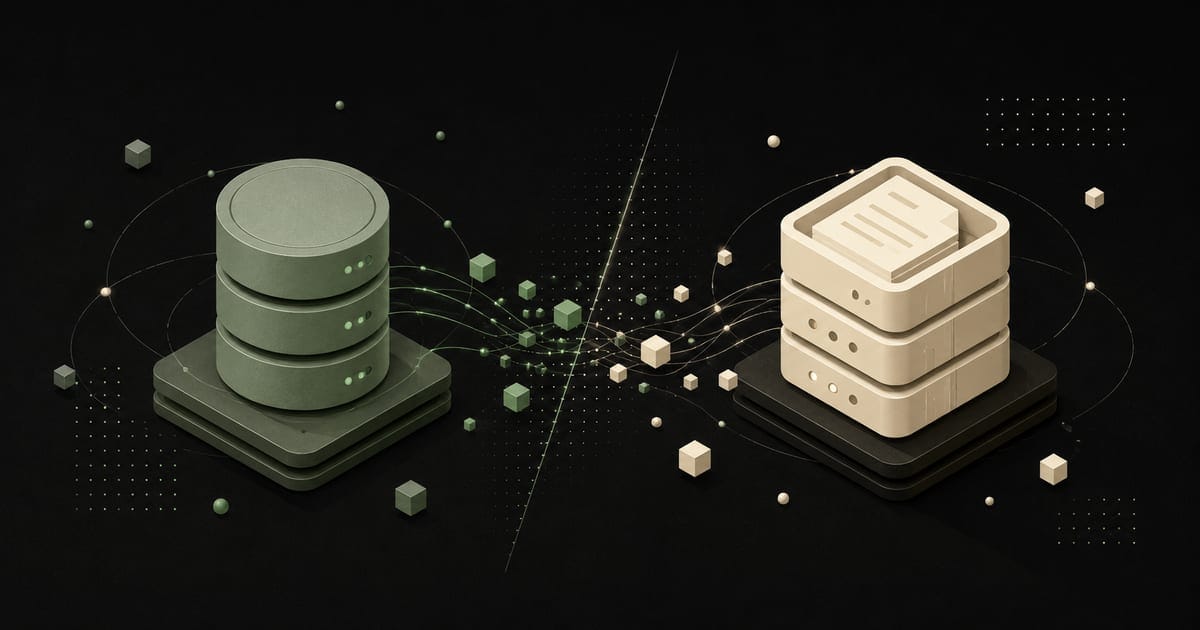
The honest truth: the frontier models are close enough that for most product features, either OpenAI or Anthropic will do the job well. Optimise for task-fit and cost, not allegiance.
The three options at a glance
| OpenAI | Anthropic | Open-source | |
|---|---|---|---|
| Access | Hosted API | Hosted API | Self-host or hosted |
| Setup effort | Low | Low | Higher (infra to run) |
| Cost model | Per token | Per token | Your compute (or a host's) |
| Data privacy | Provider terms | Provider terms | Full control if self-hosted |
| Best for | Broad capability, tooling | Strong reasoning, long context, safety | Privacy, scale economics, control |
| Lock-in | API-level | API-level | None (you own the weights) |
Choose by task, not by brand
The useful mental model is matching model tier to job:
- Hard reasoning, nuanced writing, quality-critical output → a frontier model from OpenAI or Anthropic. This is where the top models earn their price.
- High-volume, simple work (classification, extraction, short summaries) → a smaller, cheaper model. Paying frontier prices for easy tasks is the fastest way to wreck your unit economics — the running-cost trap we cover in what it costs to build an AI app.
- Long documents / large context → whichever provider gives you the context window and reliability your workload needs.
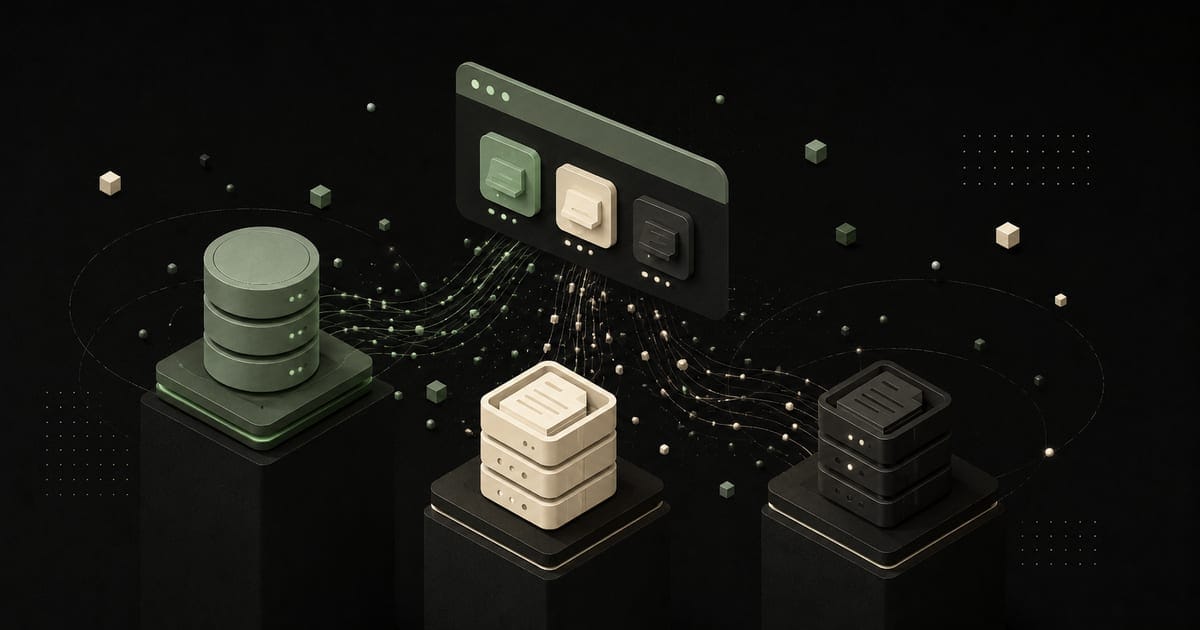
Most real products end up using more than one model — a cheap one for the common path, a frontier one for the hard cases. That's a feature of a well-engineered AI app, not a complication to avoid.
What the model tiers cost
Both providers price the same way: per million tokens, with output tokens costing several times more than input. A token is roughly four characters, so 1,000 tokens is about 750 words. The table below shows indicative pricing for the main model families as of mid-2026 — always check current pricing, as both providers adjust their price lists several times a year.
| Tier | OpenAI family | Anthropic family | Indicative input / output ($ per 1M tokens) | Context window |
|---|---|---|---|---|
| Flagship | GPT-5.x | Claude Opus 4.x | ~$1.25–5 / ~$10–25 | 400K–1M tokens |
| Mid-tier | GPT-5 mini | Claude Sonnet 4.x | ~$0.25–3 / ~$2–15 | 400K–1M tokens |
| Small | GPT-5 nano | Claude Haiku 4.5 | ~$0.05–1 / ~$0.40–5 | 200K–400K tokens |
Two things to notice. First, the spread between tiers is huge — the small models are 5–20x cheaper than the flagships, which is exactly why routing easy tasks to cheap models matters so much for your unit economics. Second, output tokens cost 4–8x more than input tokens on every row, so features that generate long responses (drafting, rewriting, chat) cost disproportionately more than features that read a lot and answer briefly (classification, extraction, summarisation).
How much does an LLM API cost for a SaaS?
For most SaaS features, the LLM bill is pennies per user action — a small model handles 1,000 support-ticket summaries for roughly $1.50 (about £1.20), while a flagship model does the same work for around $8. The API cost is rarely what makes or breaks an AI feature at MVP stage; it becomes a real line item only once usage scales.
Here's the worked example. Say each support ticket averages 800 tokens of input (the ticket text plus your prompt) and the summary comes back at 150 tokens:
- Small model ($1 in / $5 out per million tokens): 1,000 tickets = 800K input tokens ($0.80) + 150K output tokens ($0.75) ≈ $1.55
- Flagship model ($5 in / $25 out): the same 1,000 tickets ≈ $7.75
A 5x cost gap for a task the small model does perfectly well. Multiply that across every feature and every month of growth and the routing decision — not the brand decision — is what determines whether your margins survive.
When open-source is worth it
Self-hosting an open model (Llama, Mistral, Qwen, and the like) is genuinely the right call when:
- Data can't leave your environment — regulated industries, sensitive data, strict compliance.
- You're at real scale and per-token API costs now dwarf the cost of running your own inference.
- You need full control over the model, versioning, and uptime.
For an MVP, though, self-hosting is usually premature. You'd be taking on infrastructure, GPU management, and ops before you've proven anyone wants the feature — exactly the kind of premature complexity that sinks first builds. Start on an API; move to open-source when a concrete reason appears.
The rule that matters most: don't hard-wire the model
Whatever you pick, build behind a thin abstraction so the rest of your app doesn't know or care which model answered. This one decision means you can:
- Swap providers when pricing, quality, or terms change.
- Route different tasks to different models.
- A/B test models against real usage.
- Avoid the lock-in that makes switching a rewrite.
The AI space moves monthly. The teams that stay flexible are the ones who treated the model as a replaceable dependency, not a foundation — the same "keep your options cheap to reverse" logic behind our whole MVP stack philosophy.
Our default
For AI features in the MVPs we build, we start with a hosted API (OpenAI or Anthropic), chosen per task, behind a provider-agnostic layer. It's the fastest path to a working feature, the easiest to cost-control, and the cheapest to change — which is also why we can quote AI builds at a fixed price rather than an open-ended hourly estimate. Open-source enters the picture when privacy or scale makes the operational cost worth it — not before.
Frequently asked questions
When should you self-host an open-source LLM?
Self-host only when data privacy, compliance, or genuine scale economics outweigh the cost of running your own inference — which for most SaaS products is well after launch, not at MVP stage. Running an open model means GPUs, model updates, uptime, and evaluation work that a hosted API gives you for free. The clear triggers are regulated data that can't leave your environment, or an API bill that has grown past the fully loaded cost of your own inference stack.
How do you avoid LLM vendor lock-in?
Put every model call behind a thin internal abstraction, keep your prompts and evaluation tests in your own repository, and never build product logic around one provider's proprietary features. If the rest of your app only talks to your own AI service layer, the provider becomes a config value. The lock-in that hurts isn't the API — it's scattering provider-specific calls through your codebase so that switching means a rewrite.
Can you switch LLM providers later?
Yes — if you built behind an abstraction, switching is a config change plus a round of prompt tuning and regression testing, typically days rather than weeks. Prompts don't transfer perfectly between models, so budget time to re-test your key flows against your evaluation set. That's another reason to write those tests early: they turn "is the new model good enough?" from a guess into a checklist.
The bottom line
Don't pick an LLM like a sports team. For most SaaS MVPs: start with a hosted API, use a frontier model for hard tasks and a cheap one for easy ones, and only go open-source when privacy, scale, or control demand it. Above all, build so you can swap models without a rewrite — because whatever's best today won't be in six months.
The winning move in a fast-moving field isn't betting on the right model. It's building so the bet barely matters.
Adding AI to your product and unsure which model fits? Book a free scoping call — we'll match the model to each feature, model your running cost, and quote the build fixed-price.
Keep reading



Leave a comment