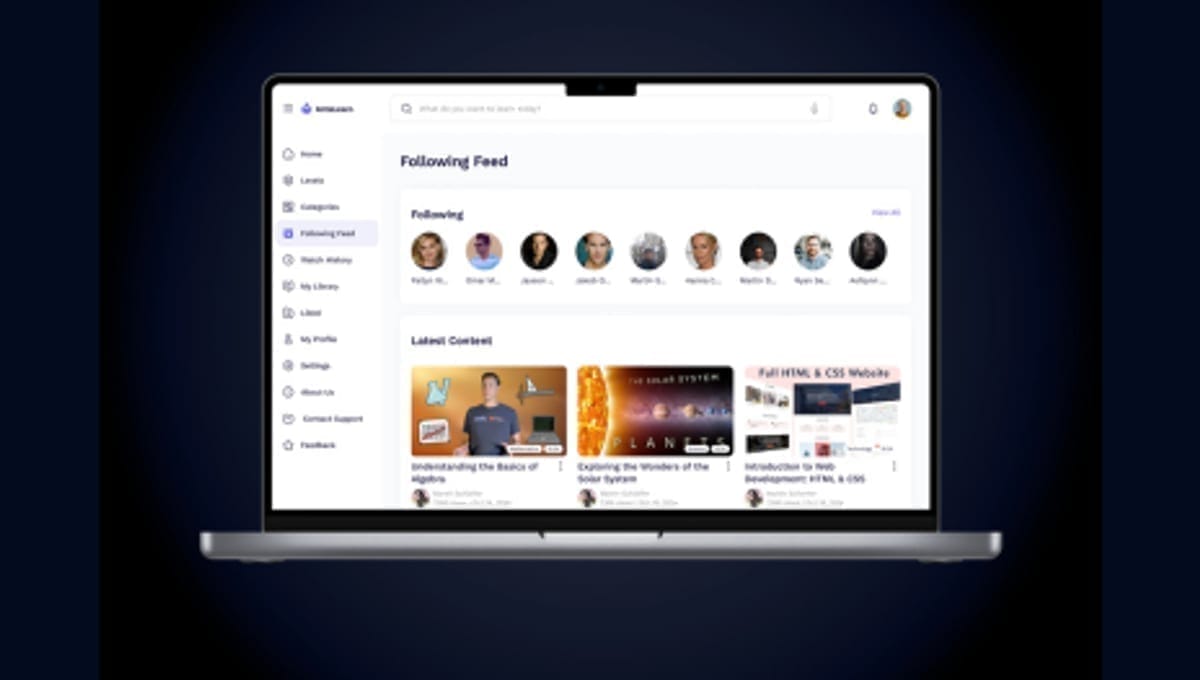
Anta Learn is a web-based learning platform designed to bring high-quality tutorial content to learners worldwide. Much like YouTube's structure, it empowers instructors to create, organise, and monetise playlists of video lessons, while giving students an intuitive, distraction-free environment for study.
Overview
Anta Learn is a web-based education platform built to centralise and streamline video-driven learning. Launched in June 2024, it targets both creators (instructors) and learners by providing a YouTube-style experience — complete with curated playlists, progress tracking, and interactive assessments — without the distractions and fragmentation of generic video sites. The platform's goals were to:
- Unify content delivery into one branded portal
- Improve learner engagement through gamification and structured courses
- Give instructors robust tools for publishing, analytics, and monetisation
Solution
To meet these objectives, we built a custom video hub featuring a responsive, full-screen player that supports playback speed controls, subtitles, and chapter markers. Learners enjoy an intuitive "Next Up" recommendation system that cues the logical continuation of their courses. On the creator side, a drag-and-drop playlist and course builder simplifies bulk uploads and automatically generates thumbnails, enabling instructors to assemble and publish multi-module courses in minutes.
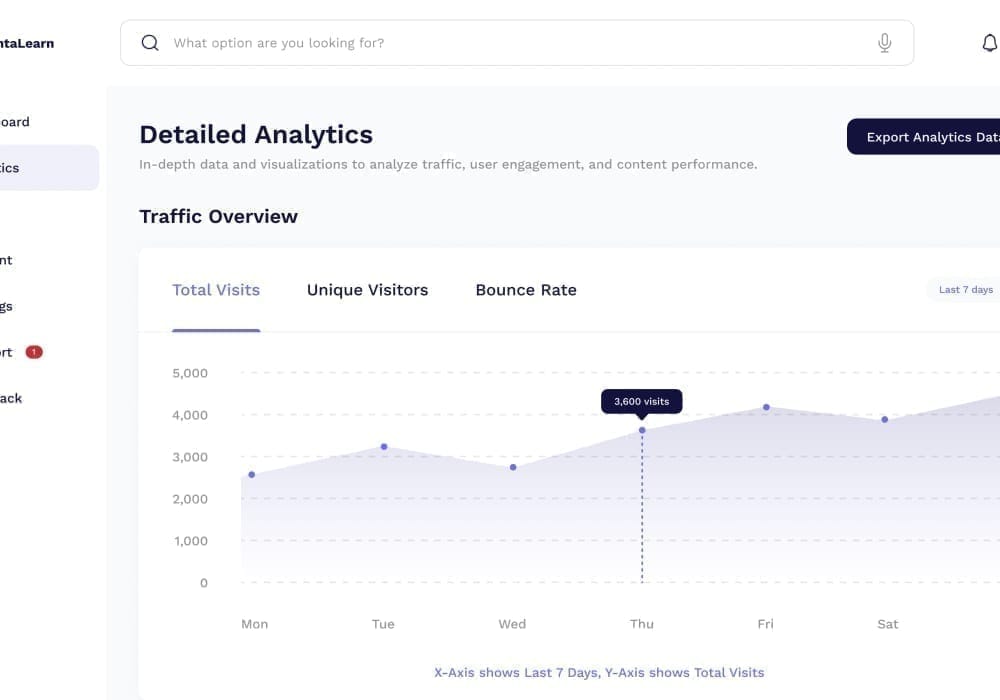
The learner dashboard tracks real-time progress, lets users save lessons for later, and awards badges and certificates upon completion. Engagement is further driven by embedded comments, Q&A threads, and inline quizzes that guide comprehension before advancing. Behind the scenes, instructors access a robust analytics portal displaying views, watch time, referral sources, and revenue breakdowns, while Stripe and Auth0 integrations handle payments and authentication seamlessly.
Process
Development followed an agile approach: the front end was built with React and Next.js in a Vercel-hosted monorepo, while a separate Express.js API service handled data operations. AWS S3 and CloudFront provided scalable video storage and delivery, and we integrated Auth0 for secure user management alongside Stripe for flexible billing. After rigorous end-to-end QA — including cross-device playback, quiz validation, and payment flows — we launched a private beta in May 2024. Feedback from our instructor cohort informed final optimisations, and the public launch in June 2024 was supported by tutorial webinars and an onboarding guide. Since then, we've continued to iterate — rolling out dark mode, accessibility enhancements, and data-driven A/B tests to refine thumbnails and quiz placement — while planning advanced AI-driven recommendations and multilingual subtitle support for future phases.
Our work began with a series of discovery workshops to map out pain points in existing tools — such as fractured content on YouTube and Google Drive — and to define MVP success metrics like completion rate and retention. We then crafted wireframes for both learner and instructor journeys, iterating high-fidelity mockups through three rounds of Figma-based user testing.
Research
We conducted stakeholder interviews and competitive analysis to pinpoint pain points in content creation and learner engagement. These insights shaped our requirements for a unified, interactive video-learning platform.
Development
Our teams built the front end with Next.js/React and the back end with Node.js/Express, integrating MongoDB Atlas and AWS S3/CloudFront for storage and delivery. Auth0 handled authentication and Stripe powered flexible billing, all within bi-weekly agile sprints.
Testing
We ran unit and integration tests to validate core flows — signup, playback, quizzes, and payments — while performance benchmarks ensured the platform's scalability. Usability and accessibility audits (WCAG AA) with real users guaranteed a polished, inclusive experience.
Deployment
The front end was deployed to Vercel's global edge network and the API to AWS Elastic Beanstalk via Docker, with CI/CD pipelines automating tests, security scans, and staging builds. After final smoke tests and stakeholder sign-off, production release was monitored in real time using Mixpanel and CloudWatch.
More case studies