
Strategy
Can AI Build Your MVP? Tools vs an Agency (2026)
Every founder we talk to in 2026 asks some version of the same question: "Lovable built me a working app in an afternoon — why would I pay an agency?" It's a fair question, and it deserves an honest answer rather than a defensive one. So here it is, from a team that uses these tools daily.
Can AI build your MVP?
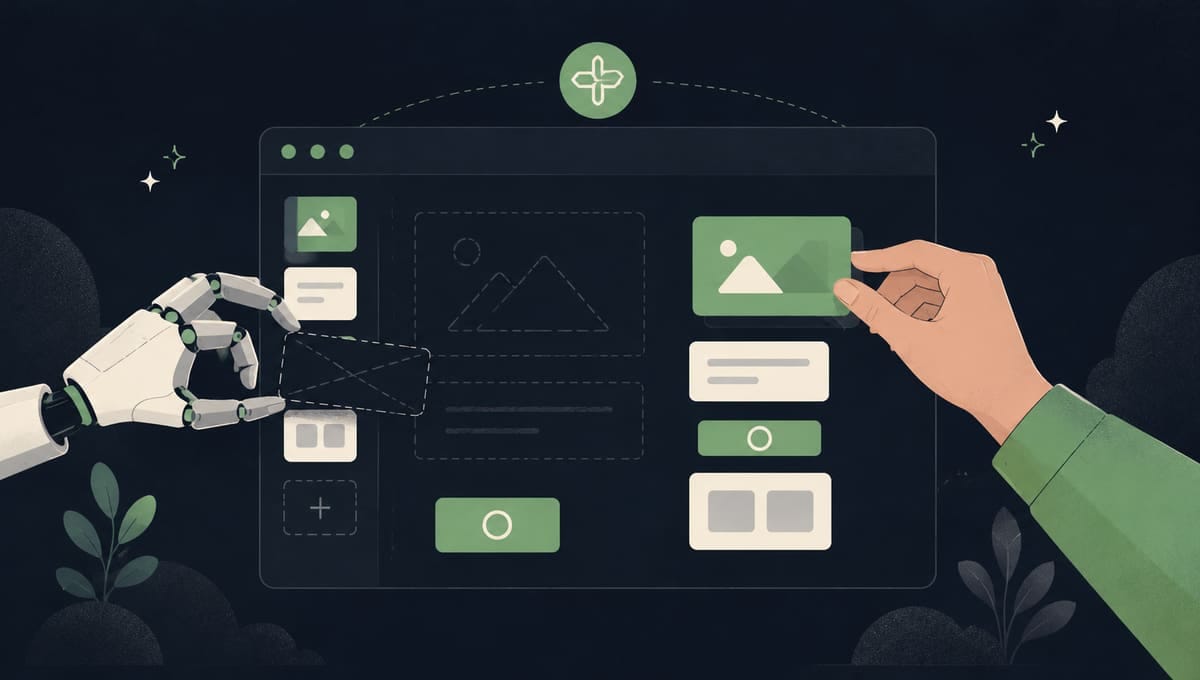
Yes — AI app builders like Lovable, Bolt, v0, and Replit can genuinely build a working prototype good enough to validate your idea, but they can't yet build a production product you'd take payments and store customer data in. The honest framing for 2026 isn't "AI vs developers." It's AI-built prototype to prove demand, professional build to launch — and because agencies now build with AI too, the professional step costs less than most founders expect.
Anyone telling you AI builders are toys is out of date. Anyone telling you they replace engineering is selling you something. The truth sits in the middle, and knowing where the line is will save you months.
AI builder vs agency: the honest comparison
| AI app builder | AI-assisted agency | Traditional agency | |
|---|---|---|---|
| Cost | £0–£500/month | From ~£15K fixed | £40K–£100K+ |
| Speed | Hours to days | 6–10 weeks | 4–6 months |
| Quality ceiling | Demo / prototype | Production-grade | Production-grade |
| Maintenance | You, via prompts | Engineers own the code | Engineers own the code |
| Best for | Validating an idea | Launching a real product | Enterprise / regulated builds |
The middle column is the part of this table that's changed most. AI-assisted agencies — teams of engineers using Cursor, Claude, and agentic tooling — now ship in weeks what took traditional teams months. That's why fixed-price MVPs have got cheaper, not because anyone is cutting corners.
What can AI app builders actually do in 2026?
More than sceptics admit. In a day or two, without writing code, you can get:
- A real, clickable product — not a Figma mockup. Working forms, pages, navigation, and state, deployed on a live URL you can put in front of users.
- Plausible design out of the box. v0 and Lovable produce UI that looks like a funded startup, which matters when you're pitching.
- Basic data and auth. Bolt and Lovable wire up Supabase — sign-up, log-in, and simple tables work for the happy path.
- Fast iteration on the pitch. Changed your positioning after three user calls? Re-prompt and redeploy the same afternoon.
That is genuinely enough to validate demand — show it to 20 prospects, collect sign-ups, even pre-sell. Founders who arrive at our door with an AI-built prototype consistently have sharper specs than founders who arrive with a document, because they've already discovered what they actually want by using it. As a validation tool, AI builders are the best thing to happen to non-technical founders in a decade. We mean that.
Where do AI-built apps break?
The last 20% — which is unfortunately the 20% a real business runs on. Patterns we see repeatedly when founders bring us AI-built codebases:
- Auth edge cases. Happy-path login works. Password resets, email changes, session expiry, OAuth account-linking, and role-based access are where AI-generated auth quietly fails — and where users get locked out or, worse, see each other's data.
- Data modelling. AI builders create tables per prompt, not per domain. Six weeks in, you have three overlapping versions of "user," no migrations, and analytics queries that can't be written.
- Security. Missing row-level security, API keys in client code, endpoints with no authorisation checks. Fine for a demo; a breach notification waiting to happen with real customer data.
- Payments. Stripe's happy path is easy. Failed renewals, proration, refunds, VAT, dunning, and webhook idempotency are not — and billing bugs cost you money and trust directly.
- Maintainability. Each prompt patches on top of the last. Around version forty, changes start breaking unrelated features and the tool can't dig itself out. This is the wall almost every heavy user hits.
None of this means the prototype was wasted — it did its job of proving demand. It means the prototype is a spec, not a foundation. Shipping it to paying customers as-is is how teams end up in the failure stories we cover in why SaaS MVPs fail.
What does each path cost?
The AI builder path: £0–£500/month. Free tiers demo fine; realistic prototyping happens on paid plans at roughly £20–£200/month, plus Supabase, hosting, and domains. Call it a few hundred pounds to fully validate an idea — historically absurd value.
The agency path: a production SaaS MVP from an AI-assisted team starts around £15K — see our pricing for exact bands. That buys the things prototypes skip: a deliberate data model, tested auth, security, billing that survives edge cases, and a codebase built on a proper SaaS MVP tech stack that engineers can extend for years. If your product has AI features of its own, budget for model running costs too — we break that down in how much an AI app costs to build.
The smart sequence is both. Spend £200 and two weeks validating with an AI builder. If nobody wants it, you've saved £15K. If they do, bring the prototype to a software development team as your spec — you'll get a tighter scope and a faster build because the product questions are already answered. And be wary of conflating the two price tags: the builder's £50/month and the agency's £15K are buying different products. One is an experiment; the other is an asset.
One more distinction worth making: this post is about AI as the builder. Whether your product should have AI features in it is a separate decision — we've written a framework for when AI features belong in your MVP.
Frequently asked questions
Can I launch a real product built with Lovable or Bolt?
You can launch it — the risk is what happens when real customers, real payments, and real data arrive. For a free tool, a waitlist, or a beta with forgiving early users, shipping the AI-built version is reasonable. The moment you're charging money or storing sensitive data, the security, billing, and data-model gaps above become business risks rather than technical footnotes. Validate on the prototype; launch on a production build.
Will AI replace development agencies?
It's replacing how agencies work, not whether you need one. AI writes a large share of our code — that's exactly why our builds are faster and cheaper than they were in 2023. What it doesn't replace is the judgement: what to build, how to model your data, which edge cases will hurt you, and who's accountable when something breaks at 2am. Agencies that don't use AI will disappear. The judgement layer won't.
Can you take over an AI-built codebase?
Yes — bring it to us, and it's a head start, not a liability. (Whether it's cheaper to salvage or start again is its own decision — see rebuild vs refactor.) We audit AI-built codebases regularly: security review, data-model assessment, and a call on what to keep versus rebuild. Well-prompted Lovable and Bolt projects often have salvageable schemas and UI. Either way, the prototype makes scoping faster, because it is the spec.
Should a non-technical founder start with an AI builder?
Almost always yes. Two weeks with Lovable or v0 will teach you more about your own product than two months of planning documents. Just go in with the right expectation: you're building a validation tool and a spec, not the product you'll scale.
The bottom line
AI app builders in 2026 are genuinely good — good enough that every founder should validate with one before spending real money. They are not yet good enough to be your production codebase, and the failure modes (auth, data, security, payments, maintainability) are precisely the ones that hurt most with paying customers. Prototype with AI, productionise with professionals — and thanks to AI-assisted development, that professional step is faster and cheaper than it's ever been.
Built something in Lovable, Bolt, or v0 and wondering what it takes to make it real? Book a free scoping call — bring the prototype, and we'll audit it and scope exactly what productionising it would cost.
Keep reading



Leave a comment